Available in March....
“Wojdyla,” that’s how it’s written. In 1949, the future pope was a misspelled name in the reports sent to the secret police by a turncoat priest in the Krakow curia. But they would get to know him very well – and how to spell his name – over the next forty years, until the death of the regime, while his life was bugged, filmed, followed, and analyzed “24/7.” Day and night. Everywhere. In Poland, and in Rome. In the airports, and on the trains. It was an extensive network that involved, in an unbroken relay, dozens and dozens of agents, moles, priests, journalists, intellectuals, blue and white-collar workers, secretaries, administrators. They included acquaintances, neighbors, and even some friends who came with him to Italy.
This was already known, because it couldn’t have been otherwise. But now there is proof of the spider’s web spun around the seminarian, then the priest, then the bishop, then the cardinal, and then the pope, thanks to documents found among the 90 kilometers of papers in the Polish Institute of National Memory. This is the same institute that produced the dossier that forced the resignation, last January 7, of the newly named archbishop of Warsaw, archbishop Stanislaw Wielgus. Wielgus, 67, was forced out under charges of collaborating with the communist authorities. The institute’s documents have also led the Polish Church to dig into the past of all its prelates.
It is estimated that 2,600 priests were collaborating with the communist government by the end of the 1970’s – that’s around 15 percent of the clergy in Poland. The curia of Krakow was truly a crossroads for spies, whether in clerical garb or not.


It had to be this way.
Even though Rex Grossman, one of the most castigated quarterbacks in the NFL, faced Drew Brees, one of the most celebrated quarterbacks in the NFL, you knew this is how it would end.
Even though Brees completed 16 more passes for 210 more yards, you just knew.
Even when Grossman was on his way to a subpar 11-of-26 passing day, you just knew.
You see, perceptions and statistics and reputations don't matter in today's sports world, where Gators karma supersedes all else. You know it, we know it, even Grossman knew it before leading the Chicago Bears to a 39-14 annihilation of the New Orleans Saints in the NFC title game Sunday.
When asked before the game about the massive amount of University of Florida kismet and karma currently enveloping the sports world, Rex grinned a giddy Gators grin.
"Yeah, I'd love to tap into it," said Grossman, the first UF quarterback to ever take his team to the Super Bowl. "There's a lot of good things happening with the Gators. We [Gators] have the No. 1 football team and the No. 1 basketball team. I'm excited about being affiliated with that university."
Lions and Tigers and Bears -- and Gators. Oh my. No matter what we try to do to escape the infinite, incessant, imperishable Gators lovefest, we just can't. Baseball, basketball, football -- they're everywhere. The entire sports world is crawling with Gators -- chomping, chanting, chiding Gators.
The football team won the national championship.
The basketball team won the national championship.
UF alumnus David Eckstein won the World Series MVP for the St. Louis Cardinals.
Former Gators Udonis Haslem and Jason Williams were integral parts of the Miami Heat's march to the NBA championship. Even Gators grad Emmitt Smith won Dancing with the Stars.
I don't know about you, but my money is on Gators golfer Chris DiMarco to win the Masters. And if Bull Gator Bob Graham decides to un-retire and run for president, Hillary Clinton and Barack Obama don't stand a chance.
"It's unbelievable," said Bears defensive end Alex Brown, who played at -- yep, you guessed it -- the University of Florida. "If you're a Gator, chances are something good is going to happen to you."
Grossman may be the most unlikely Gators success story of them all. Less than a month ago, Chicago fans booed him unmercifully and the Chicago media called for Bears Coach Lovie Smith to bench him.
"Blind Faith in Rex Will Cost Lovie," blared one newspaper headline.
"Hey, Lovie, Quit the Pampering, Dump Rex," bellowed another.
"Grossman Must Go," shrieked yet another.
Wrote one Chicago columnist: "To say he (Grossman) looks like a deer in the headlights would be an insult to the deer." Brown, Grossman's friend since college, laughs now at the many Rex revilers.
"Rex is taking us to the Super Bowl," he told a group of reporters in a jubilant post-game locker room. "What bad things are you guys going to write about him now?"
His teammates have rallied around Rex; his coaches have stuck by him. Lovie Smith has been around the league a long time and says he's never seen a quarterback savaged in the media like Grossman.
It's true. When you think about it, has there ever been more criticism heaped upon a young quarterback who led his team to an NFC-best 13-3 record? Even though Grossman is in his fourth year, he is a rookie in many ways. He was injured for most of his first three years and this is first full season.
"Redemption?" Grossman said when asked the inevitable question about answering his critics. "That's for you guys to write about. It doesn't get any better than this right now. It feels great to be NFC champions. This is huge." No, this is inevitable.
This is incredible.
This is unavoidable.
This is just the way it is in a sports world that has utterly and completely gone Gator.
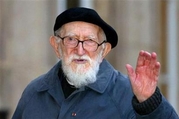
The frail priest, who spent most of his life protecting people dumped on the margins of Western life, was little known outside France but was cherished at home as a modern-day saint.
"Abbe Pierre represented the spirit of rebellion against misery, suffering, injustice and the strength of solidarity," Chirac's statement said.
Born in 1912, Henri-Antoine Groues was the fifth child of a silk merchant but gave up his comfortable life to become a monk.
He took his nickname Abbe Pierre -- "abbe" is a traditional title for priests -- as a resistance chaplain during World War Two, when he forged ID papers to smuggle refugees out of France.
He began campaigning for the homeless in 1949 and shot to fame in 1954 when he went on air to demand shelter for thousands of people threatened with death during a bitterly cold winter.
His appeal set off a wave of sympathy, and his Emmaus chain of hostels for the homeless now covers 41 countries.
In all the dioceses of the United States of America, January 22 (or January 23, when January 22 falls on a Sunday) shall be observed as a particular day of penance for violations to the dignity of the human person committed through acts of abortion, and of prayer for the full restoration of the legal guarantee of the right to life. The Mass “For Peace and Justice” (no. 22 of the “Masses for Various Needs”) should be celebrated with violet vestments as an appropriate liturgical observance for this day.
The pro-life community -- participating in the annual March for Life today
-- is readying itself for Democrats seeking more funding for groups that support
abortion and perhaps lifting restrictions on federal funding for abortion.
But pro-life leaders note the House will still take a pro-life stance on many issues and that President Bush will likely veto objectionable legislation.
"We just need to do all we can to make the case that abortion exploits
women and destroys children," said Rep. Christopher H. Smith, New Jersey
Republican and chairman of the Bipartisan Congressional Pro-Life Caucus.
Mr. Smith also expects some Democrats -- especially those with their eyes
on the White House -- to strike a moderate, seemingly pro-life tone on abortion.
"There may be a bogus attempt to claim common ground while money is being
given to Planned Parenthood," he said, warning pro-lifers to be skeptical.Meanwhile, activists on both sides are awaiting a decision by the Supreme Court, expected before June, on whether to uphold a federal law banning an abortion procedure sometimes called partial-birth abortion.
Christians are “heirs to past divisions,” but “Christ can do anything, he ‘makes the deaf hear and (the) mute speak’ (Mk 7, 37),” he can instil in Christian the ardent desire to listen to and communicate with one another and speak together with Him the language of mutual love.” It is with this heartfelt emphasis that Benedict XVI referred to the Week of Prayer for Christian Unity, an annual event that will be celebrated by many Christian denominations from January 18 to the 25.
“It is my intention to comment at length on this biblical subject,” said the Pope, “next January 25, liturgical feast of the Conversion of St Paul, when, on the occasion of the end of the ‘Week of Prayer,’ I shall preside over Vespers celebrations in the Basilica of St Paul Outside the Walls, starting at 5.30 pm. I expect you to come in great numbers to that liturgical meeting since unity can be especially achieved through prayer, and the more prayer is unanimous, the more it is appreciated by God.”
This weekend the cardinal in charge of the process said he expected the
checks performed by the local dioceses on all three miracles to be complete by
April. A formal announcement is expected on April 2, the second anniversary of
John Paul's death, and senior Vatican sources expect him to be declared a saint
within 18 months.
Sister Jean Kenny, Catholic nun and football prognosticator, has made her pick for Sunday's NFC Championship Game: Chicago Bears 27, New Orleans Saints 24.
"Isn't that something? Most of the time, 99.9% of the time, I'm for the Saints, but not this Sunday," Kenny says.
Kenny, 57, based in her hometown of Chicago, is a Bears fan. She says she puts that aside when she makes her picks. She correctly has picked the winners of 17 of the past 21 Super Bowls.
A couple in their 90s who had decided to divorce sought the advice of a lawyer. “You’ve been married so long,” said the lawyer. “Why on earth would you split up now?”
“We were waiting for the kids to die,” came the reply.
Call it “late-life divorce black humor.”
I came to this book about Jesus - the first part of which I now present to the public – after a long interior journey. In the time of my youth – during the
1930’s and ‘40’s – there was published a series of exhilarating books about
Jesus. I recall the names of just a few authors: Karl Adam, Romano Guardini,
Franz Michel Willam, Giovanni Papini, Jean-Daniel Rops. In all these books, the
image of Jesus Christ was outlined beginning with the Gospels: how He lived upon
the earth and how, although He was truly man, He at the same time brought God to
men, being one with God as Son of God. Thus, through the man Jesus, God became
visible, and beginning with God one could see the image of the just man.
Beginning in the 1950’s, the situation changed. The rift between the “historical
Jesus” and the “Christ of faith” became wider and wider; the one pulled away
from the other before one’s very eyes. But what meaning can there be in faith in
Jesus Christ, in Jesus the Son the of living God, if the man Jesus is so
different from how the evangelists present Him, and from how the Church
proclaims Him on the basis of the Gospels? Progress in historical-critical
research led to increasingly subtle distinctions among the different levels of
tradition. Behind these layers, the figure of Jesus, upon whom faith rests,
became increasingly more uncertain, and took on increasingly less definite
outlines. At the same time, the reconstructions of this Jesus, who had to be
sought behind the traditions of the Evangelists and their sources, became
increasingly contradictory: from the revolutionary enemy of the Romans who
opposed the established power and naturally failed, to the meek moralist who
permitted everything and inexplicably ended up causing his own ruin. Those who
read a certain number of these reconstructions one after another will
immediately notice that these are much more the snapshots of the authors and
their ideals than they are the unveiling of an icon that has become confused. In
the meantime, distrust has grown toward these images of Jesus, and in any case
the figure of Jesus has withdrawn from us even more. All of these attempts have,
in any case, left behind themselves as their common denominator the impression
that we know very little for sure about Jesus, and that it was only later that
faith in His divinity shaped His image. This impression, in the meantime, has
deeply penetrated the general consciousness of Christianity. Such a situation is
dramatic for the faith because it renders uncertain its authentic point of
reference: intimate friendship with Jesus, on which everything depends,
threatens to become a groping around in the void.
* * *I felt the need to provide the readers with these indications of method because these determine the route of my interpretation of the figure of Jesus in the New Testament. For my presentation of Jesus, this means above all that I trust the Gospels. Naturally,I take for granted what the Council and modern exegesis say about the literary genres, about the intention of various expressions, about the communitarian context of the Gospels and the fact that they speak within this living context.
While accepting all this as much as possible, I wanted to make an effort to
present the Jesus of the Gospels as the real Jesus, as the “historical Jesus” in
the real sense of the expression. I am convinced – and I hope that I can also
make the reader aware of this – that this figure is much more logical, and from
the historical point of view also more understandable, than the reconstructions
we have had to confront in recent decades. I maintain that this very Jesus – the
Jesus of the Gospels – is an historically sensible and convincing figure. His
crucifixion and the impact that he had can only be explained if something
extraordinary happened, if the figure and the words of Jesus radically exceeded
the hopes and expectations of his time. Around twenty years after the death of
Jesus, we find already in the great hymn to Christ in the Letter to the
Philippians (2:6-8) the full expression of a Christology, in which it is said of
Jesus that He was equal to God but stripped Himself, became man, and humbled
Himself to the point of death on the cross, and that to Him is due the homage of
creation, the adoration that in the prophet Isaiah (45:23) God proclaimed as due
to Himself alone. Critical research quite rightly poses this question: what
happened in those twenty years after the crucifixion of Jesus? How did this
Christology develop? The action of anonymous communitarian formations, whose
representatives are being sought out, in reality doesn’t explain anything. How
could unknown groups be so creative, how could they be convincing and impose
themselves? Isn’t it more logical, even from the historical point of view, to
suppose that the great impulse came at the beginning, and that the figure of
Jesus burst beyond all of the available categories, and could thus be understood
only by beginning from the mystery of God? Naturally, to believe that even as a
man He was God, and made this known by concealing it within parables while
nevertheless making it increasingly clear, goes beyond the possibilities of the
historical method. On the contrary, if one begins from this conviction of faith
and reads the texts with the historical method and with its openness to what is
greater, the texts open up to reveal a way and a figure that are worthy of
faith. What then becomes clear is the multilevel struggle present in the
writings of the New Testament over the figure of Jesus, and despite all the
differences, the profound agreement of these writings. It is clear that with
this view of the figure of Jesus I go beyond what Schnackenburg, for example,
says in representation of a good portion of contemporary exegesis. I hope,
however, that the reader understands that this book was not written against
modern exegesis, but with great recognition of all this has given and continues
to give to us. It has made us familiar with a great quantity of sources and
conceptions through which the figure of Jesus can become present to us with a
liveliness and depth that we couldn’t even imagine just a few decades ago. I
have sought only to go beyond mere historical-critical interpretation, applying
the new methodological criteria that allow us to make a properly theological
interpretation of the Bible that naturally requires faith, without thereby
wanting or being able in any way to renounce historical seriousness. Of course,
it goes without saying that this book is absolutely not a magisterial act, but
is only the expression of my personal search for the “face of the Lord” (Psalm
27:8). So everyone is free to disagree with me. I ask only that my readers begin
with that attitude of good will without which there is no understanding. As I
said at the beginning of the preface, my interior journey toward this book was a
long one. I was able to begin working on it during summer vacation in 2003. In
August of 2004, I gave definitive form to chapters 1 through 4. After my
election to the episcopal see of Rome, I used all of my free moments to carry
the project forward. Because I do not know how much more time and strength will
be granted to me, I have now decided to publish the first ten chapters as the
first part of the book, going from the baptism in the Jordan to the confession
of Peter and the Transfiguration.
Rome, the feast of Saint Jerome September 30,2006
 Has anyone spotted this commet yet? The pictures all seem impressive. I remember trying to find Halley's comet in a very clear night sky--one might remember the Miller Lite commercial with Bob Ueker trying to spot it.."there it is, there it is" and then he bends down to get a Miller Lite and it goes swooshing over his head--well I had a similar experience minus the Miller Lite and it swooshing over my head.
The Pontiff mentioned the international scope of migration. “According to
United Nations estimates, there are almost 200 million migrants, about 9 million
refugees and 2 million international students;” to these we must add, “a great
number of brothers and sisters who are internally displaced people or
irregular”, and especially remember that to each “corresponds, one way or
another, a family”.
For Benedict XVI we must first look at this phenomenon in religious
terms and remember the Holy Family, “icon of all families, because it reflects
the image of God that is held in the heart of each human family even when it is
weakened and sometimes scarred by life’s experiences.”
“In this misfortune experienced by the Family of Nazareth [. . .] we
can catch a glimpse of the painful condition in which all migrants live,
especially, refugees, exiles, evacuees, internally displaced persons, those who
are persecuted. We can take a quick look at the difficulties that every migrant
family lives through, the hardships and humiliations, the deprivation and
fragility of millions,” he said.
The Catholic Academy of Liturgy met on January 4, 2007 in Toronto, Canada, prior to the annual meeting of the North American Academy of Liturgy. The keynote speaker was Bishop Donald Trautman of Erie, Pennsylvania and chair of the Bishops’ Committee on the Liturgy of the United States Conference of Catholic Bishops (USCCB). In his address entitled “When Should Liturgists Be Prophetic?” Trautman raised concerns about current directions in the revision now underway of the English edition of the Roman Missal being prepared by the International Commission on English in the Liturgy (ICEL). The first edition in English of the Roman Missal was issued in 1973. Drawing on biblical scholarship, historical theology, and his many years of pastoral experience as a bishop, he contended that the new translations do not adequately meet the liturgical needs of the average Catholic and expressed fears that the significant changes in the texts no longer reflect understandable English usage. Trautman argued that the proposed changes of the people’s parts during the Mass will confuse the faithful and predicted that the new texts will contribute to a greater number of departures from the Catholic Church.
The Bishop cited various problematic texts, criticizing their awkward structure and arcane vocabulary that would be very difficult for the priest to pray aloud and for the people to follow. Just as problematic for Trautman was the recent decision to change the words of consecration that refer to Christ’s blood being shed “for all” to “for many.” That change could be easily misinterpreted as denying the faith of the Roman Catholic Church that Christ died for all people.
Bishop Trautman challenged Catholic liturgical scholars of North America to assist the bishops in promoting a liturgy that is accessible and pastorally aware. He urged them, in a spirit of respect and love for the Church, to be courageous in questioning those developments that would render the liturgy incomprehensible and betray the intention of the Second Vatican Council (1962-65).